The view from the other side

I have spent the past week in London.
The suburb of Richmond is home to the National Archives of the United Kingdom. The Archives have a considerable collection of documents from the rebellion of the American colonies and the war for independence. In recognition of our 250th birthday, they put together an exhibit on those events.
In the US, we have a sort of piecemeal story of the country's foundation. Taxation, no representation. Tea Party. George Washington sailed across the Delaware in the winter. Paul Revere and some lanterns. Alexander Hamilton did not throw away his shot. Victory!
The UK Archives tells the story in more detail, and from the point of view of the British crown and loyalists.
Britain had just waged a costly war in North America as part of its global struggle with France. In the colonies, this was known as the French and Indian War, because France fought alongside indigenous tribes to seize control of the American colonies. Britain prevailed. American colonists were very happy to have been protected by the Crown from across the Atlantic.
The war had been expensive, though, and the British Crown and Parliament aimed to recover their costs from the colonists who had benefited from their protection. They levied a series of duties and taxes on goods sold to or shipped from the colonies.
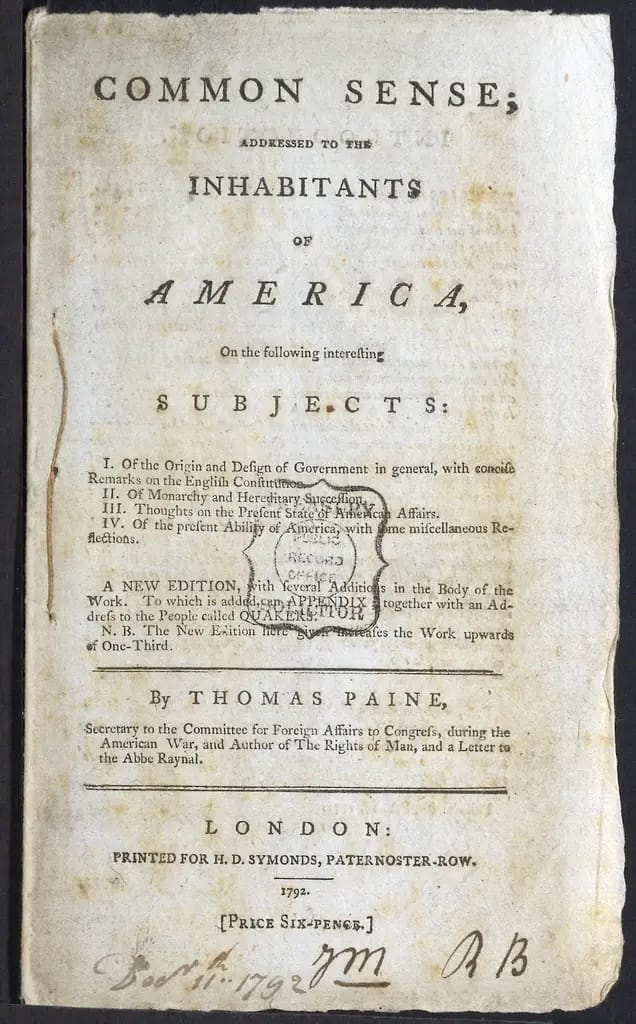
Over time, the accumulating taxes began to grate on the colonists. They protested in a series of letters and petitions to Great Britain over the years. Radical voices began to demand change. Thomas Paine published Common Sense, a pamphlet in which he wrote:
Where…is the King of America? I’ll tell you Friend…so far as we approve of monarchy…in America THE LAW IS KING. For as in absolute governments the King is law, so in free countries the law ought to be King; and there ought to be no other.
Radical language then, radical now.
Tensions continued to rise. Britain imposed the Stamp Act, colonists destroyed British tea in Boston harbor, and skirmishes broke out between local militia and the British army in places like Bunker Hill.
In 1775, colonial leaders including Thomas Jefferson drafted an Olive Branch Petition to King George III, blaming his advisors and ministers for any misunderstanding and poor decisions. They asked him to relieve them of those costs and to accept their continued loyalty. They assured him that they wanted to be British subjects.
Sadly, the King and his advisors were just as frustrated with the growing tensions between the colonists and their British masters. King George had drafted a Proclamation of Rebellion just weeks after the Olive Branch Petition was written. No telegraph or internet back then: the two documents are likely to have passed one another on the Atlantic ocean onboard sailing ships, headed in opposite directions. Neither side had the opportunity to blink.
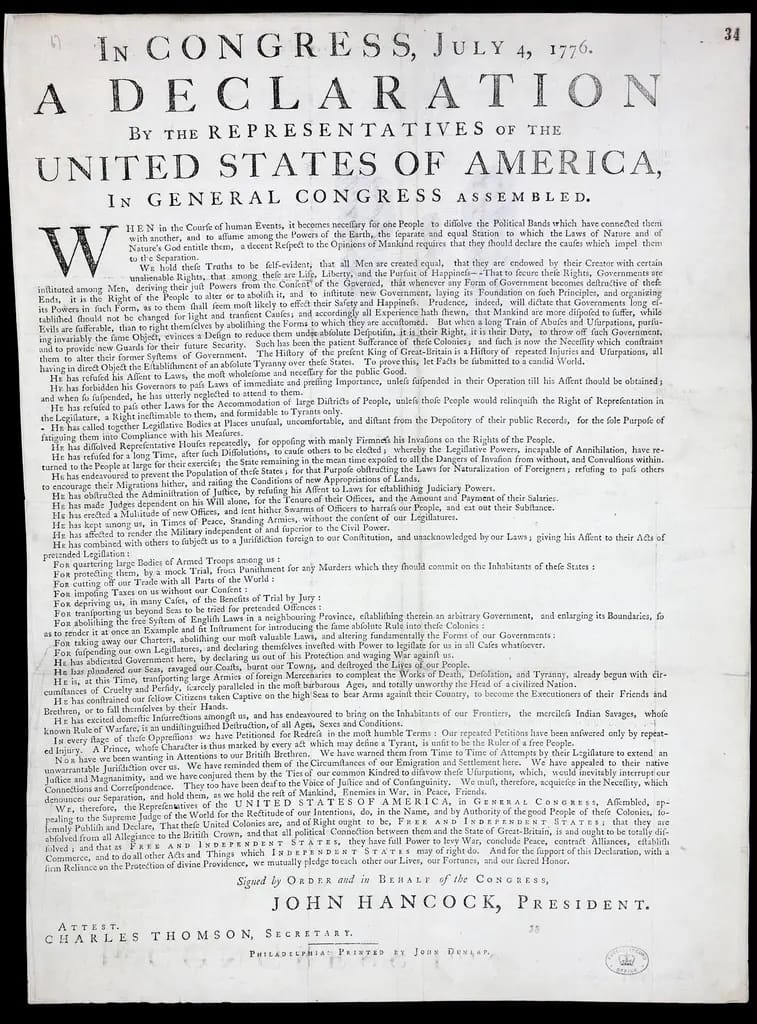
When they received the Proclamation of Rebellion, the colonists drafted and published the Declaration of Independence. If you're an American, you likely know this document from the photographs published of the Library of Congress copy, with all the big signatures at the bottom. But that physical copy circulated for months to the colonies, collecting those signatures. The original version was published in July. 200 copies were printed and posted by a Philadelphia printer. Several of those were pulled down and sent to London.
Here's the one on display from my visit:
War broke out for real. The Continental Congress hired a veteran of the British forces in the French and Indian War, George Washington, to assemble and lead an army to fight for independence from the Crown.
The British had plenty of local support. Loyalist colonists declared their commitment to the Crown and provided material support and intelligence to British forces. While Washington and the colonists won a few early victories, the tide turned strongly in favor of Britain in the ensuing years.
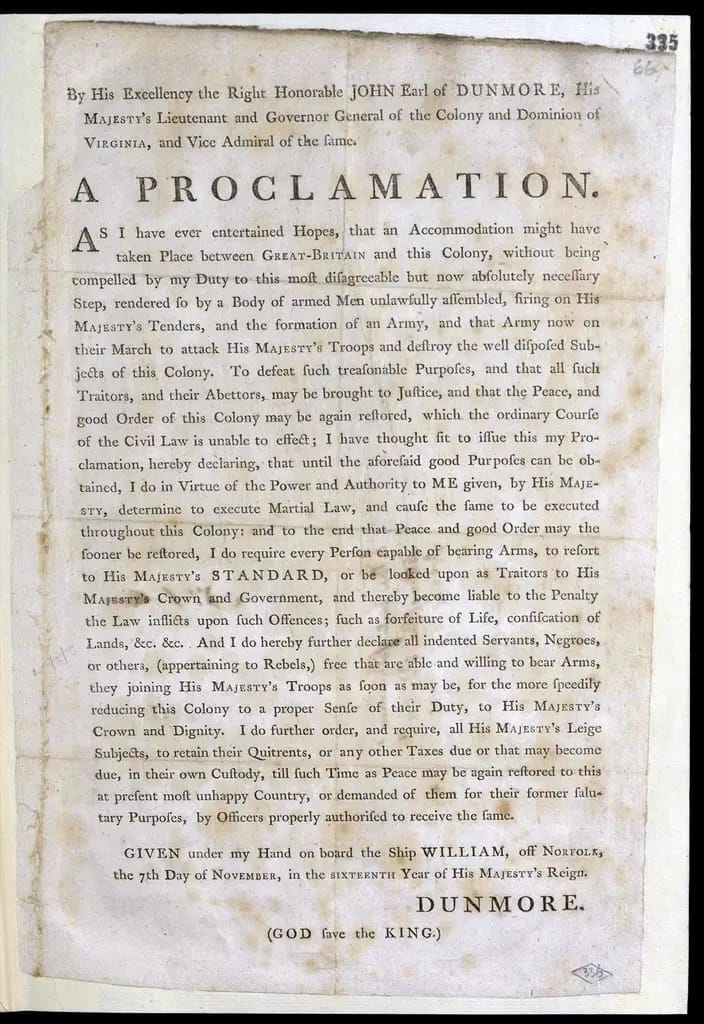
All colonies tolerated, and some legislated, slavery. Many of America's founding fathers were slaveholders. Virginia's governor John Murray, earl of Dunmore, made a cynical decision: he offered freedom to slaves who would flee their slaveholders and fight on the side of the British, but only if their slaveholders were rebels. Slaves owned by Loyalists remained property under the decree.
The war dragged on. American forces got steadily better at tactics – no pitched battles, good use of terrain, small teams striking at supply lines over vast territories to undermine the Crown's control of the immense field of battle.
And the British lost their taste for the fight. They had just been nine years at war with France in North America, at ruinous cost. The treasury was empty and popular support for the struggle faded. The Declaration is a soaring statement of equality and rights. Washington was magnificent. The colonists longed to be, fought to be, a new nation. But also: the British just got tired.
It took time to negotiate and end to the war. We celebrate 1776 as America's birthday, but the Treaty of Paris wasn't signed until 7 years later in 1783, officially establishing the United States of America. (It must have absolutely sandpapered the faces off the British delegation to have to negotiate that treaty in France!)
In the wake of the war, America had to create itself.
A huge fraction of the population had been loyal to the Crown during the course of the war. Weaving those people back into the fabric of the nation required time, forgiveness and forgetfulness. The Dunmore declaration had freed Black Americans – no forgiveness or forgetfulness for them. Some fled their homes for Canada, where slavery was not tolerated; some were re-enslaved. That profound injustice would spark a new war 78 years later. That struggle is not yet finished. And indigenous people had fought on both sides of the Revolutionary War. They were expressly not American citizens, but needed to find a way to live among the new states. That struggle, too, continues.
The Declaration of Independence is a soaring statement of principle, but its creation is just one event in a maelstrom.
The war that it sparked was brutal, grinding, nearly lost again and again. The colonies – America – won it in the end by a mix of strategic and tactical excellence, circumstance, and great good luck. That victory is worth celebrating.
But we have been, before, throughout and ever since, a work in progress. We are a better country today – more equitable, more inclusive, closer to the ideals of the Declaration and the Constitution – than we were in 1776, 1886. Not, I think, better than we were in 2008 or 2024, but our arcs are long and bend favorably if we pull at them.
On this Independence Day, I celebrate the anniversary and I commit to the struggle.